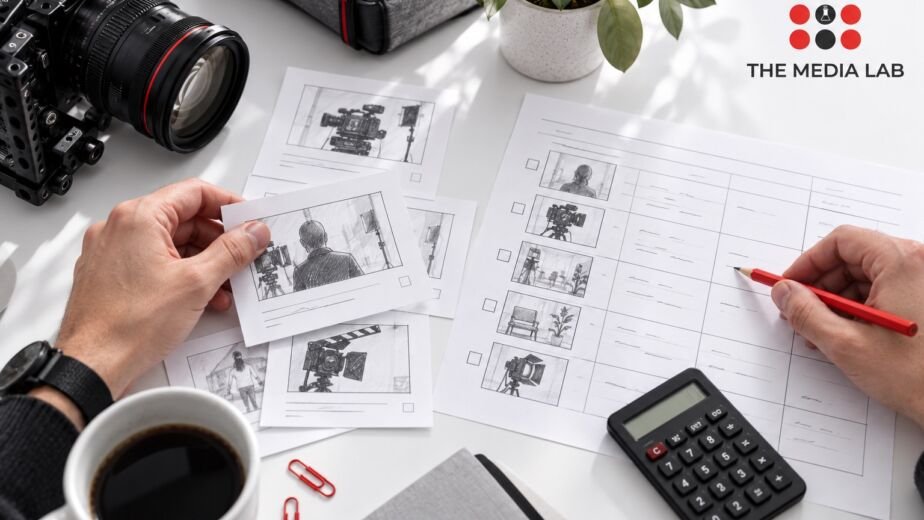

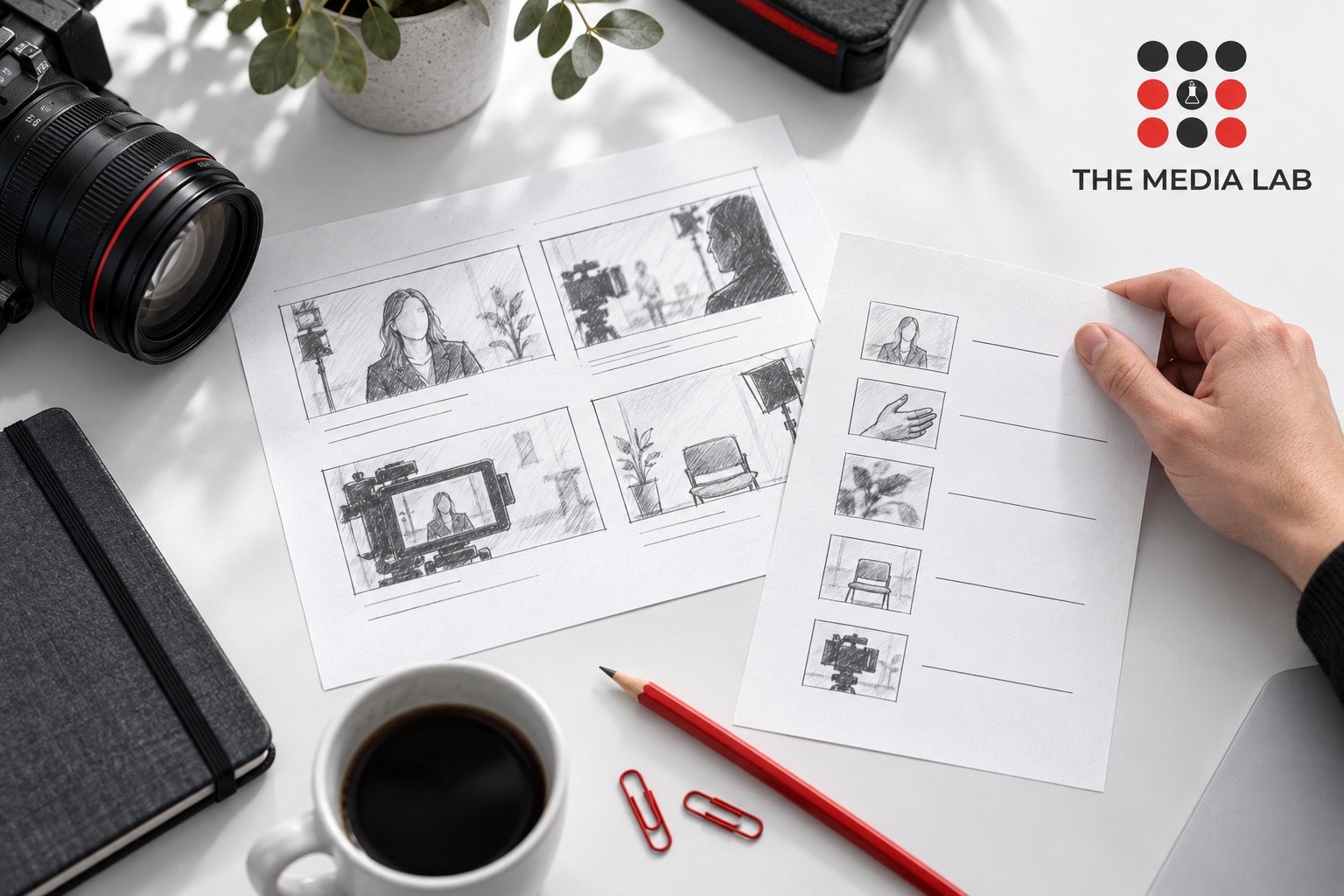
Cover: AI-generated editorial illustration; not a client project photograph.
Hiring a video production company in Dubai starts with a brief that makes your project clear. A useful brief explains who the film is for, what it must communicate and where it will be used. It gives production teams the same starting point, so you can compare their ideas and proposals fairly.
This guide includes a practical brief you can copy, a worked example and the questions to resolve before filming. For examples of our work and available formats, explore The Media Lab’s video production services in Dubai.
Start with the decision your viewer needs to make
“We need a company video” describes an output, but leaves the purpose open. Be more specific: does a prospective customer need to understand your process, trust your team or request a demonstration? Choose one main action. A film designed for a sales meeting may need a different opening from a social campaign.
Write a one-sentence objective before discussing camera equipment. For example: “Help procurement teams understand how our service works, then invite them to book a consultation.” This is a planning example, not a claim about a client project.
A video production brief you can copy
Complete these fields before asking for proposals. Mark anything undecided as a question rather than leaving the supplier to assume an answer.
- Audience: Who will watch, what do they already know and what concern must the film answer?
- Objective: What should the viewer understand or do after watching?
- Main message: What is the single idea they should remember?
- Evidence: Which product demonstration, process, interview or approved project can support that message?
- Placement: List the website, presentation, event screen, organic social channels and any paid advertising use.
- Deliverables: Specify each edit, approximate duration, aspect ratio, language, caption requirement and call to action.
- Filming: List locations, interviewees, available products, access restrictions and potential scheduling constraints.
- Brand assets: Identify the owner of approved logos, fonts, product names, claims and reference material.
- Approvals: Name one person who will consolidate feedback and identify any additional reviewers.
- Schedule: Include the launch date, internal review deadlines and dates when people or locations are available.
- Budget and priorities: Share your planning allowance privately and identify essential and optional items. Ask for clear assumptions and exclusions.
- Usage and handover: Ask what is included for music, talent, stock assets, final exports, raw footage and editable project files.
Turn one filming day into clearly defined outputs
Different formats often need different framing, wording or footage. A horizontal company film cannot always become a strong vertical Reel by cropping its edges. Discuss both uses before the shoot, particularly where an interviewee, product or on-screen text must remain visible.
Illustrative example: a professional-services business needs a website introduction and material for LinkedIn. Its brief could request one short company film, three topic-specific interview clips and separate caption files. The producer can then plan interview questions and supporting footage around those outputs. The number of edits is an example, not a standard package.
For company profiles, leadership interviews and internal communications, review our corporate video production services. If the main purpose is ongoing publishing, involve the social media team when deciding formats and topics.
Check portfolios against your actual brief
Watch complete films as well as showreels. A montage shows visual range, while a complete project lets you judge how the story opens, whether speech is clear and how the film leads to a next step. Ask which parts of a relevant example the supplier handled.
- For interviews, listen for clean dialogue and natural answers.
- For products, assess whether the viewer can understand important details.
- For events, look for a clear narrative rather than only a sequence of crowd shots.
- For social content, check whether the opening and framing work on a phone.
Compare these observations with our selected work and discuss the treatment that suits your project. Do not choose equipment specifications before understanding the production problem they need to solve.
Resolve practical details before filming
Confirm location access, quiet interview space, available power, preparation time and who can approve changes on the day. Ask the production team to identify any permissions needed for the proposed shoot and who is responsible for obtaining them. Requirements depend on the actual location and activity.
Plan accessibility while developing the script. The W3C media planning guidance explains how captions, transcripts and descriptions relate to different audience needs. Include the relevant outputs in the brief so they can be scoped from the start.
Agree how feedback and delivery will work
Separate approval of the concept, script, filming plan and edit. A change to the main message after filming may need different footage; a spelling correction usually does not. Ask the supplier to distinguish included revisions from changes to the agreed scope.
Use a single feedback document with timecodes and a clear owner. Before accepting delivery, check names, claims, captions, audio, end cards and every required format. Confirm how long the supplier will retain the footage and how future versions will be handled.
Frequently asked questions
Do I need a finished script before contacting a production company?
No. An audience, objective, core message and list of uses are enough to start a useful discussion. Specify whether you need the supplier to develop the concept and script.
How do I compare video production proposals?
Give suppliers the same brief, then compare the proposed approach, filming assumptions, deliverables, review stages and exclusions. Our video production proposal guide takes you through the comparison.
Should I ask for raw footage?
If your team needs it, include that requirement before the quote is agreed. Raw footage, editable projects and licensed assets are separate handover questions; their availability should not be assumed.
How long does a production take?
The schedule depends on the concept, locations, contributor availability, post-production and review turnaround. Ask for milestones based on your brief rather than relying on a general turnaround promise.
Bring us the brief, including the open questions
The Media Lab can discuss the creative approach, production scope and intended use of your video. Send your brief and target launch date so we can shape a project-specific proposal.